
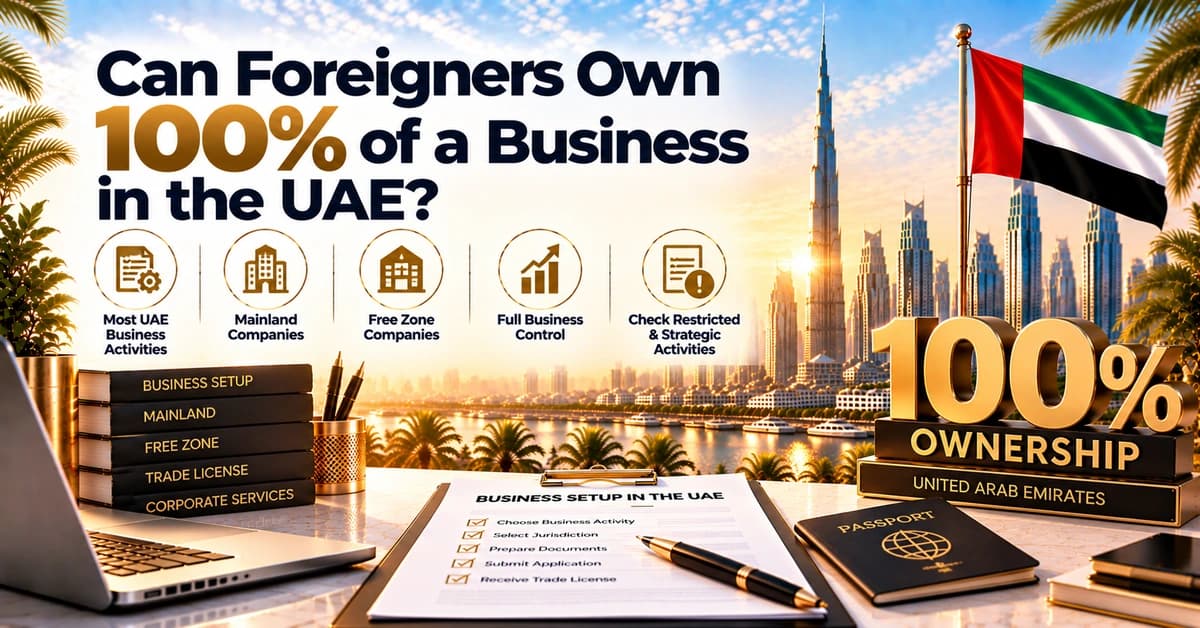
For many years, one question stopped international investors from entering the UAE market: do I need a local partner? Today, the answer is very different. Reforms over the last few years have opened the door to full foreign ownership in most sectors, both on the mainland and in free zones.
At Company Setup Consultant, we advise entrepreneurs from around the world on ownership structures, licensing and compliance in Dubai and across the UAE. This guide explains what the law allows, where exceptions still apply, and how ownership decisions affect the cost to start a business in Dubai.
Foreign Ownership at a Glance
The table below gives a quick view of how ownership works across the main setup routes.
Setup Route | Foreign Ownership Allowed | Key Point |
|---|---|---|
Mainland company (most activities) | Up to 100% | Available for most commercial, industrial and professional activities |
Mainland company (strategic impact activities) | Restricted | Special approvals or UAE national participation may apply |
Free zone company | 100% | Full foreign ownership within the free zone framework |
Offshore or holding structures | Up to 100% | Used mainly for holding assets and international structuring |
Regulated professions | Depends | May need extra approvals from the relevant authority |
Because rules vary by emirate and by authority, always confirm your specific activity before you apply.
How the Law Changed
Before June 2021, most onshore companies needed a UAE national shareholder holding at least 51%. A federal amendment to the Commercial Companies Law removed that general requirement and allowed full foreign ownership for a wide range of activities. Each emirate now decides which activities are open, and the federal government maintains the list of strategic impact activities that remain subject to special treatment.
For investors, the practical effect is simple. You can often set up a mainland company in Dubai with full ownership and without a local sponsor, which was once the main barrier to entry.
Which Activities Still Have Restrictions?
Activities with strategic impact are the main exception. These have generally included sectors such as:
Security, defence and military related activities
Banking, insurance and certain financial activities
Currency printing and related services
Telecommunications
Hajj and Umrah services
Certain religious and fisheries related services
The exact list and how it is applied can change, so do not rely on a general summary when you plan an investment. A licensed adviser can check whether your activity is open to full foreign ownership in your chosen emirate. Our article on choosing a business activity in the UAE explains how activity selection affects your license and approvals.
Mainland vs Free Zone: Which Gives You More Ownership Freedom?
Both routes can offer 100% foreign ownership, but they work differently.
Mainland companies can trade directly across the UAE market, bid for government contracts and open offices in different locations. Since ownership rules have relaxed, this route is more accessible than before.
Free zone companies offer full ownership, simple setup and specific tax and customs benefits, but operating in the wider UAE market usually needs a distributor or an additional license.
Your choice should follow your business model, not just ownership rules. For a full comparison, read our guide on mainland vs free zone business setup.
If a direct market presence is important, you can also explore our mainland company setup services in Dubai.
Do You Still Need a Local Service Agent or Sponsor?
For most activities where 100% foreign ownership is allowed, a local sponsor holding shares is no longer required. Some licensing authorities and activities may still ask for a local service agent, who provides administrative support without owning the business. This is different from the old sponsor model, where a UAE national held majority shares.
Requirements depend on your activity and authority, which is why professional advice at the start can save you both money and time.
Can You Own a UAE Company Without Living in the UAE?
Ownership and residency are separate. A non resident can hold shares in a UAE company, and much of the setup process can be done remotely. Residence visa steps such as medical tests and Emirates ID biometrics do require you to be in the country. Our guide on how to start a business in the UAE from abroad covers what you can complete remotely and what needs your presence.
Does Full Ownership Change the Cost to Start a Business in Dubai?
Ownership structure influences your total budget in several ways. When you compare the cost to start a business in Dubai, consider these factors:
License type and jurisdiction. Mainland and free zone fees differ, and activity based licenses vary widely.
Office requirements. Mainland companies generally need a leased office, while some free zones offer flexible options.
Sponsor or service agent costs. If a service agent is required, there may be an annual fee, though this is not needed for every activity.
Visa quota. The number of residence visas is linked to your office and license.
Professional fees. These cover application handling, approvals and follow ups.
Ongoing compliance. Renewals, accounting and tax registrations recur every year.
Full ownership means all profits belong to you, but it also means you carry the compliance responsibility. Reading our guide on the cost to start a business in Dubai will help you build a realistic budget before you commit.
What Full Ownership Means for Visas and Residency
As a 100% owner, you can usually sponsor your own investor or partner visa and apply for employee visas within your quota. Residency depends on your license, office and other conditions rather than ownership alone. To understand the process and requirements, see our article on getting a UAE residence visa through your company.
Common Mistakes Foreign Investors Make
Assuming every activity allows 100% foreign ownership
Choosing a jurisdiction before confirming the activity is permitted
Signing informal side agreements with a local partner instead of a proper legal structure
Underestimating approvals for regulated professions
Ignoring corporate tax and VAT duties after the license is issued
Working with unregistered or unclear service providers
A short consultation before you apply usually prevents all of these.
Why Work With Company Setup Consultant?
Ownership rules look simple on paper, but the details depend on the activity, the emirate and the authority. Company Setup Consultant helps investors confirm eligibility, choose the right structure and complete licensing, visas and compliance without guesswork. We explain each requirement in plain language and give transparent guidance so you can make confident decisions.
Frequently Asked Questions
Q: Can foreigners own 100% of a business in the UAE?
A: Yes, in most cases. Foreigners can fully own free zone companies and a wide range of mainland companies, although some strategic impact activities remain restricted.
Q: Do I need a local sponsor to start a business in Dubai?
A: For most activities open to full foreign ownership, no local shareholder is required. Some authorities may still ask for a local service agent depending on the activity.
Q: Is 100% foreign ownership allowed on the mainland?
A: Yes for most activities. Reforms introduced in 2021 removed the general 51% national ownership requirement for many onshore businesses.
Q: Which activities do not allow full foreign ownership?
A: Activities with strategic impact, such as certain security, financial, telecommunications and religious services, may have restrictions. Check your specific activity before applying.
Q: Is a free zone better for foreign ownership?
A: Free zones offer full ownership too. The better option depends on whether you need to trade directly in the UAE market or mainly serve international clients.
Q: Can I own a UAE company if I live abroad?
A: Yes. Non residents can hold shares and complete much of the setup remotely, but residence visa steps require a visit to the UAE.
Q: Does full ownership make it cheaper to start a business in Dubai?
A: It can remove sponsor related costs, but total cost still depends on your license, office, visas and professional fees. Ask for a detailed written breakdown.
Q: Do foreign owners need to register for corporate tax?
A: Yes, in most cases. UAE companies, including those fully foreign owned, are generally required to register for corporate tax with the Federal Tax Authority.
Confirm Your Ownership Structure With Company Setup Consultant
Understanding the rules is the first step, but applying them to your business is where expert help matters. Company Setup Consultant helps foreign investors confirm activity eligibility, choose the right jurisdiction and complete setup with clarity on costs. Speak to our team today for a tailored plan and a transparent quote. Contact us now and start your UAE business with full ownership and full confidence.