
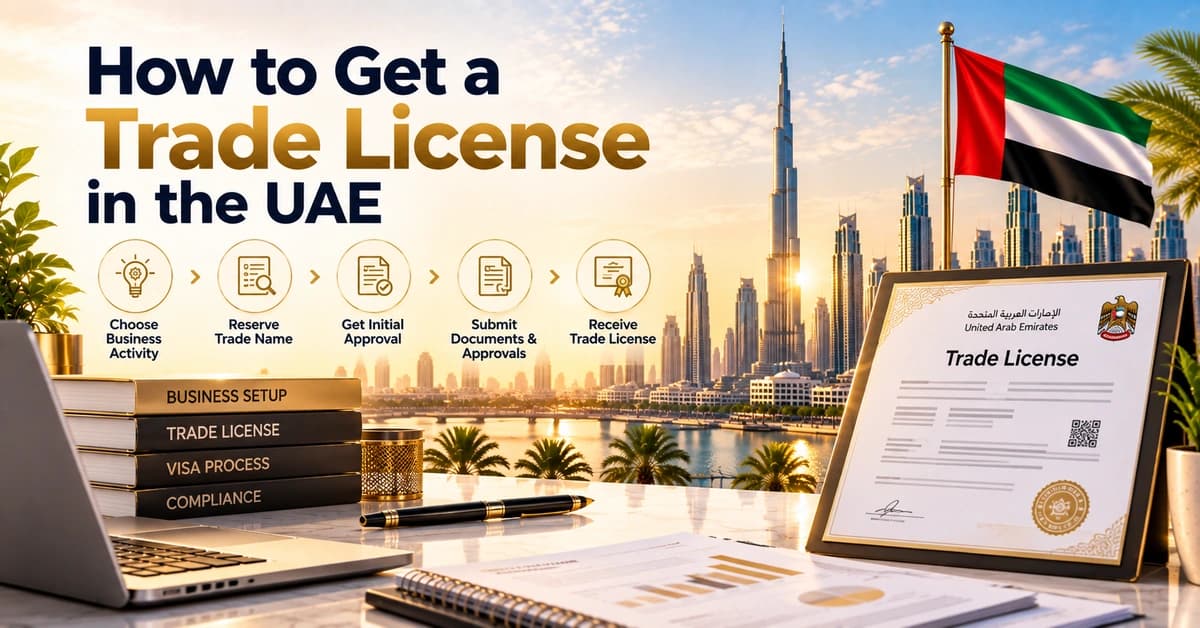
Getting a trade license is the first legal step to running a business in the UAE, and it shapes almost every cost that follows. If you are researching the cost to start a business in Dubai, the license fee is only one part of the budget. This guide from Company Setup Consultant explains license types, the step-by-step process, documents, timelines and a realistic breakdown of what it costs to set up a company in Dubai.
What Is a Trade License in the UAE?
A trade license is an official permit that allows a company to carry out specific commercial, industrial or professional activities in the UAE. The issuing authority depends on where you set up:
Mainland: the Dubai Department of Economy and Tourism (DET)
Free zones: the authority of the chosen free zone, such as DMCC, IFZA, Meydan, DAFZA or DIFC
Offshore: authorities such as JAFZA Offshore or RAK ICC, mainly for holding and asset-protection structures
Without a valid license, you cannot open a corporate bank account, sponsor employee visas, sign commercial contracts or trade legally.
Types of Trade Licenses in Dubai
Your license type affects your cost, your visa quota and where you can sell. The main categories are:
Commercial license: for trading, import, export and general business activities.
Professional license: for consultants, designers, engineers and service providers.
Industrial license: for manufacturing, processing and production.
Tourism license: for travel agencies, tour operators and holiday home businesses.
E-commerce license: for online stores and digital marketplaces.
Each category has its own approvals, fees and restrictions. To compare them in detail before you apply, read our breakdown of the different types of trade license in the UAE.
Mainland vs Free Zone vs Offshore: Which Is Right for You?
This decision has the biggest impact on your total setup cost.
Mainland license: Since the 2021 reforms, most commercial activities allow 100% foreign ownership. A mainland license lets you trade anywhere in the UAE, serve local customers directly and bid for government contracts. It usually requires a physical office.
Free zone license: Free zones offer 100% ownership, quick registration and packages that bundle the license, visa allocation and office space. They suit startups, service companies and exporters. Free zone companies that qualify may benefit from a 0% corporate tax rate on qualifying income.
Offshore license: Best for holding assets and international structuring. It does not allow you to operate physically in the UAE market.
If you are still deciding, this guide on mainland vs free zone company setup explains which structure fits which type of business.
Cost to Start a Business in Dubai: A Realistic Breakdown
The cost to start a business in Dubai depends on your business activity, legal structure, office requirements and number of visas. The figures below are approximate market ranges. Authorities revise fees regularly, so always confirm current rates before you commit.
Cost Item | Approximate Range (AED) |
|---|---|
Free zone license package (start-up) | 5,500 to 20,000 |
Mainland license (DET) | 10,000 to 20,000+ |
Trade name reservation | 600 to 1,500 |
Flexi desk or shared office | 5,000 to 15,000 per year |
Physical office (mainland, with Ejari) | 15,000 to 60,000+ per year |
Investor or employment visa (per visa) | 3,000 to 6,000 |
Emirates ID and medical test | 1,000 to 1,500 per person |
Bank account opening | 0 to 5,000 (varies by bank) |
PRO and professional service fees | Varies by provider |
Typical first-year budgets:
Freelancer or consultant in a free zone: roughly AED 12,000 to 25,000
Small trading or service company in a free zone: roughly AED 20,000 to 45,000
Mainland LLC with an office and visas: roughly AED 30,000 to 80,000 or more
These figures cover setup only. Recurring costs such as license renewal, visa renewals, insurance, rent and accounting come on top. For a deeper look at every line item, use our full guide on the cost to start a business in Dubai.
Hidden Costs Many Founders Miss
Extra approvals for regulated activities such as food, health, education or financial services
Security deposits on office leases and visas
Renewal fees, which are often close to the original license fee
Corporate tax and VAT compliance costs
Charges for adding or changing business activities
Planning for these items upfront prevents budget surprises and delays.
Step-by-Step Process to Get a Trade License in the UAE
Step 1: Define Your Business Activity
Every UAE license is tied to specific activities. Choose activities that match your real operations. Regulated activities may need approval from bodies such as the Dubai Health Authority, Dubai Municipality or the Central Bank.
Step 2: Choose Your Jurisdiction and Legal Structure
Decide between mainland, free zone or offshore, then pick a legal form:
Limited Liability Company (LLC)
Sole establishment
Free Zone Company (FZCO) or Free Zone Establishment (FZE)
Branch of a foreign company
Step 3: Reserve Your Trade Name
Your company name must follow UAE naming rules. It cannot include offensive terms, religious references or names already registered. Getting this right at the start avoids rejections, so review the official trade name rules in the UAE before you submit options.
Step 4: Obtain Initial Approval
The licensing authority reviews your activity and structure, then issues an initial approval confirming that your application can proceed.
Step 5: Prepare Legal Documents and Office Space
Depending on the structure, you may need a Memorandum of Association (MOA), a shareholders' agreement and a tenancy contract. Mainland companies need a registered Ejari tenancy contract, while many free zones offer flexi desks that reduce costs.
Step 6: Obtain External Approvals (If Needed)
Some activities need additional permits from government bodies. Identifying these early avoids rework and long delays.
Step 7: Pay Fees and Receive Your License
Once documents, approvals and payments are complete, you receive your trade license. You can then apply for visas, open a corporate bank account and begin operations.
Documents Required for a UAE Trade License
Requirements vary by authority, but most applicants need:
Passport copies of all shareholders and managers
Passport-size photographs
Emirates ID (for UAE residents)
Visa copy or entry stamp, where applicable
No Objection Certificate (NOC) from a current sponsor, if applicable
Proposed company name options
Business plan or activity description
Tenancy contract (mainland)
Board resolution and parent company documents (for branches)
Foreign documents may need attestation, notarisation or Arabic translation. Our checklist of documents required for business setup in the UAE covers each structure in detail so nothing is missed at submission.
How Long Does It Take to Get a Trade License?
Timelines depend on the jurisdiction and activity:
Free zone: typically 3 to 10 working days
Mainland (standard activities): typically 5 to 14 working days
Regulated activities: can take 3 to 6 weeks because of extra approvals
Incomplete documents and delayed third-party approvals are the most common causes of delay.
Tax and Compliance After Getting Your License
Obtaining a license is only the beginning. UAE businesses must also meet tax and regulatory obligations:
Corporate tax: a 9% rate applies to taxable profits above AED 375,000. Qualifying free zone persons may benefit from a 0% rate on qualifying income.
VAT: a 5% rate applies, and registration is mandatory once taxable supplies exceed AED 375,000 in a year.
Economic Substance and UBO filings: required depending on your activity and structure.
License renewal: most licenses are valid for one year, although some authorities now offer multi-year options. Missing the renewal date leads to fines. The process is explained in our guide on how to renew a trade license in the UAE.
Tax rules and thresholds can change, so speak with a qualified adviser for guidance specific to your situation.
Common Mistakes to Avoid
Choosing the wrong jurisdiction: a free zone license may not allow direct trading in the local market.
Selecting too many or irrelevant activities: this raises fees and can trigger extra approvals.
Ignoring visa quotas: your office size and license type decide how many visas you can issue.
Focusing only on the license fee: renewal, rent, visas and compliance all add to the true cost.
Missing compliance deadlines: late renewals and tax filings lead to penalties.
Why Choose Company Setup Consultant?
Company Setup Consultant helps entrepreneurs, SMEs and international investors launch businesses in the UAE with clarity and confidence. Our team works with UAE licensing authorities, free zones and mainland regulations every day. We provide:
Transparent cost estimates with no hidden charges
Honest jurisdiction advice based on your goals
End-to-end support, from license and visas to bank accounts and compliance
Guidance tailored to your industry and budget
Every recommendation is based on current UAE regulations, and we encourage clients to verify fees and rules with the relevant authority before making final decisions.
Frequently Asked Questions
Q: How much does it cost to start a business in Dubai?
A: The cost to start a business in Dubai generally ranges from AED 12,000 to AED 80,000 or more in the first year. Free zone packages are usually cheaper, while mainland companies with physical offices and multiple visas cost more. The final amount depends on your activity, office needs and visa count.
Q: Can a foreigner get a trade license in the UAE?
A: Yes. Foreign nationals can own 100% of a company in free zones and in most mainland activities. Some strategic sectors still have specific ownership rules, so confirm your activity before applying.
Q: What is the cheapest way to get a trade license in Dubai?
A: A free zone license with a flexi desk is typically the most affordable option. Some free zones offer start-up packages that include the license, a visa allocation and shared office space.
Q: How long does it take to get a trade license in Dubai?
A: Most free zone licenses are issued within 3 to 10 working days, and mainland licenses within 5 to 14 working days. Regulated activities can take several weeks because of external approvals.
Q: Do I need a physical office for a Dubai trade license?
A: Mainland companies generally need a registered office with an Ejari contract. Many free zones allow flexi desks or virtual office solutions, which reduce costs.
Q: Is a trade license valid for life?
A: No. UAE trade licenses must be renewed, usually every year. Late renewal can result in fines and restrictions on your visas and bank account.
Q: Do I have to pay corporate tax after getting a trade license?
A: Most UAE businesses must register for corporate tax. The standard rate is 9% on taxable income above AED 375,000, and qualifying free zone companies may benefit from a 0% rate on qualifying income.
Q: Can I change my business activity after getting the license?
A: Yes. You can add or amend activities by applying to the licensing authority. Additional fees and approvals may apply.
Ready to Start Your Business in the UAE?
Getting your trade license does not have to be confusing or expensive. Company Setup Consultant will help you choose the right jurisdiction, control your setup costs and complete every step smoothly. Whether you are a freelancer, a startup founder or an international investor, our experts will guide you from day one. Contact Company Setup Consultant today for a free consultation and a customised cost estimate for your Dubai business.