
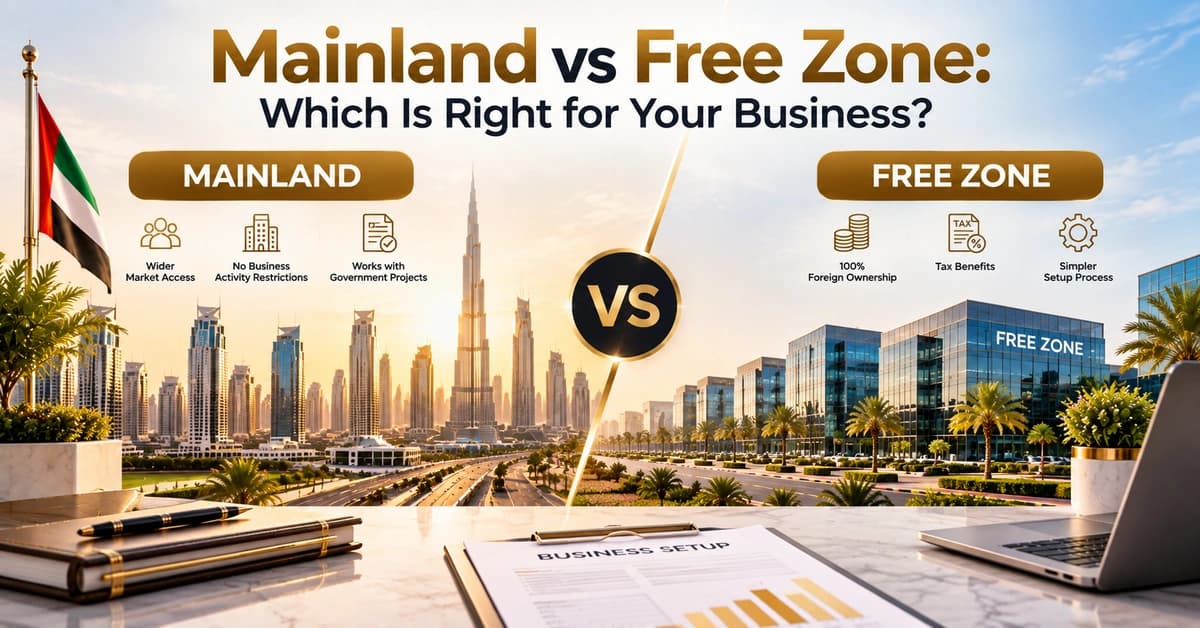
Choosing between a mainland license and a free zone license is the biggest decision you will make before launching a company in Dubai. It shapes who you can sell to, where you can operate, how many visas you can hold and, most importantly, the cost to start a business in Dubai.
The short answer is this. A free zone is usually the cheaper and faster route, and it suits businesses that serve international clients or work online. A mainland license costs more, but it lets you trade directly with the local market and take on government contracts. The right choice depends on your business model, not on which option looks cheaper on paper.
At Company Setup Consultant, we have guided entrepreneurs, freelancers and investors through both routes. This guide explains the differences in plain language so you can decide with confidence.
Note: All costs in this article are approximate estimates in UAE dirhams (AED). Fees change with government updates, authority policies and your business activity, so confirm current figures with a licensed advisor before making payments.
Mainland vs Free Zone at a Glance
Factor | Mainland | Free Zone |
|---|---|---|
Licensing authority | Dubai Department of Economy and Tourism (DET) | Individual free zone authority |
Foreign ownership | Up to 100% for most activities | 100% |
Trade in the UAE market | Direct, unrestricted | Restricted unless through a distributor or dual license |
Office requirement | Physical office with Ejari | Flexi desk, shared or private office |
Estimated first year cost | AED 20,000 to AED 100,000+ | AED 10,000 to AED 50,000+ |
Visa quota | Linked to office size | Linked to package or office size |
Government tenders | Eligible | Generally not eligible |
What Is a Mainland Company in Dubai?
A mainland company is licensed by the Dubai Department of Economy and Tourism. It can operate anywhere in Dubai and across the wider UAE, and it can trade with individuals, businesses and government bodies without needing an intermediary.
Since the UAE updated its commercial company law, most business activities can be fully foreign owned on the mainland. Only a small list of strategic sectors still carries ownership conditions. This change removed the old requirement for a local sponsor in most cases, which made the mainland far more attractive to international founders.
If you want a detailed walkthrough of the process, documents and approvals, our guide to mainland company formation in Dubai covers each stage.
Advantages of a Mainland License
Sell directly to customers anywhere in Dubai and the UAE
Open retail shops, restaurants, clinics and showrooms
Bid for government and semi government contracts
Choose from a very wide range of business activities
No restriction on office location within Dubai
Easier to scale into multiple branches
Disadvantages of a Mainland License
Higher setup and running costs
A physical office lease is compulsory
Some activities need extra approvals from external authorities
Visa numbers depend on your office space
What Is a Free Zone Company in Dubai?
A free zone is a designated area with its own regulatory authority, offering simplified company formation and business friendly rules. Dubai has more than 30 free zones, many built around specific industries such as technology, media, logistics, finance, gold and commodities, and healthcare.
Free zone companies enjoy 100% foreign ownership, full repatriation of profits and quick registration. Packages often bundle the license, a flexi desk and a visa allocation, which is why the entry price is lower. To understand how packages differ between zones, explore our overview of free zone company setup in Dubai.
Advantages of a Free Zone License
Lower and more predictable setup costs
Fast approvals, often within a few working days
Flexi desk options for lean businesses
Industry focused communities and infrastructure
Simple, bundled packages
Qualifying companies may benefit from a 0% corporate tax rate on qualifying income
Disadvantages of a Free Zone License
Limited ability to trade directly with the UAE mainland market
Government tenders are usually out of reach
License activities are tied to the zone's permitted list
Moving to another jurisdiction later can mean paying setup fees again
Cost to Start a Business in Dubai: Mainland vs Free Zone
Cost is where most founders begin, so let us look at the real numbers. The cost to start a business in Dubai depends on the license, office, visas and services you choose.
Free Zone Setup Cost
A typical free zone package for a small business includes:
License and registration: AED 5,000 to AED 15,000
Flexi desk or shared office: AED 2,000 to AED 10,000 per year
Visa per person: AED 3,000 to AED 5,000, including medical test and Emirates ID
Establishment card and other admin fees: AED 1,000 to AED 3,000
Most solo founders can launch for roughly AED 10,000 to AED 25,000 in the first year. Premium zones with stronger brand recognition can reach AED 50,000 or more.
Mainland Setup Cost
A typical mainland setup includes:
Trade license fee: AED 10,000 to AED 15,000 for most commercial activities
Trade name reservation and initial approval: AED 2,000 to AED 4,000
Office lease with Ejari registration: AED 8,000 to AED 60,000 or more per year
Visa per person: AED 3,000 to AED 5,000
External approvals for regulated activities: Varies by sector
A small mainland office based company often starts between AED 20,000 and AED 45,000, while retail, food or warehouse operations can go well beyond AED 100,000. For a full itemized view of each expense, read our detailed breakdown of business setup cost in Dubai.
Why the Cheaper Option Is Not Always the Best Value
A low license price can hide limits. If a free zone company later needs a mainland distributor or a second license to reach local customers, the total cost can rise above a direct mainland setup. Always compare the full cost over two to three years, not only the first invoice.
Key Differences That Affect Your Decision
1. Target Market
Ask who your customers are. If you sell to individuals and companies inside Dubai, the mainland is the natural fit. If your clients are overseas, or you trade mainly online, a free zone works well.
2. Office Space and Location
Mainland companies must lease a physical office. Free zones often allow flexi desks, which cuts costs for consultants, freelancers and online businesses. Retail and restaurant businesses need a mainland shop or approved commercial space.
3. Visa Quota
The number of visas is linked to your office size. Free zone packages usually include a set allocation, while mainland quotas grow with larger office space. If you plan to hire quickly, check quotas before you sign a lease.
4. Business Activities
Mainland licenses cover a broader set of commercial, professional and industrial activities. Free zones are limited to what the authority allows, although industry specific zones can be excellent for their niche.
5. Banking
Banks review both structures carefully. A clear business plan, proper documents and a genuine office presence help either type of company get approved. Some banks look more closely at flexi desk companies, so preparation matters.
6. Tax and Compliance
The UAE applies a 9% corporate tax on taxable profits above AED 375,000. Qualifying free zone companies can access a 0% rate on qualifying income, but only if they meet conditions such as maintaining adequate substance and avoiding non qualifying activities. Mainland companies pay the standard rate on taxable profits above the threshold. VAT at 5% applies to both once taxable supplies exceed AED 375,000. Correct registration is part of setting up properly, and our team can support you with corporate tax registration in the UAE.
Can You Have Both? Dual Licensing Explained
Yes. Dubai allows many free zone companies to obtain a dual license, which lets them operate on the mainland while keeping their free zone base. This can be a smart middle path for businesses that want free zone benefits but also need local market access. Dual licensing involves an additional fee and approval from the relevant authorities, so it should be planned from the start.
Which Option Is Right for Your Business?
Use these examples as a guide.
Choose a free zone if you are:
A freelancer, consultant or coach serving international clients
An e-commerce or online service business
A startup that wants low entry costs and fast launch
A trading company operating mainly in international markets
A business in a sector with a dedicated free zone, such as media or technology
Choose the mainland if you are:
Opening a shop, restaurant, salon, clinic or showroom
Selling directly to UAE customers and companies
Planning to bid for government contracts
Building a larger team that needs flexible office space
Looking for long term growth across multiple locations
Residency and Long Term Benefits
Both structures allow you to sponsor an investor visa and family visas, subject to office size and authority rules. Founders who meet investment or business criteria may qualify for extended residency options such as the UAE golden visa for investors and entrepreneurs, which offers stability for you and your family.
Common Mistakes to Avoid
Picking a jurisdiction based only on the lowest price
Choosing the wrong business activity and needing an amendment later
Ignoring renewal fees, which can match or exceed the first year cost
Underestimating visa and office requirements
Skipping professional advice and repeating applications after rejection
Many of these errors are avoidable with support from experienced PRO services in Dubai who manage documents, approvals and renewals correctly the first time.
How Company Setup Consultant Helps You Decide
Company Setup Consultant is a Dubai based advisory firm focused on transparent pricing and practical guidance. Instead of pushing one option, we compare mainland, free zone and dual license routes against your business model, budget and growth plans. Every quote separates government fees from service charges, so you know exactly where your money goes. From license selection and documentation to visas, banking and compliance, our team supports you through every stage.
Frequently Asked Questions
Q: Is mainland or free zone better for a new business in Dubai?
A: Neither is better for everyone. A free zone suits online, service and export businesses that want lower costs. The mainland suits companies that sell directly to UAE customers or need retail space.
Q: What is the cost to start a business in Dubai on the mainland?
A: A small mainland company usually costs between AED 20,000 and AED 45,000 in the first year, including the license, office lease and one visa. Retail and food businesses can cost much more.
Q: What is the cost to start a business in a Dubai free zone?
A: Most free zone packages range from AED 10,000 to AED 25,000 for the first year, while premium zones can reach AED 50,000 or more. Visas and other services may be extra.
Q: Can a free zone company do business in mainland Dubai?
A: Not directly. It needs a local distributor, a service agreement or a dual license from the relevant authority to operate in the mainland market.
Q: Can foreigners own 100% of a mainland company in Dubai?
A: Yes, for most business activities under the updated UAE commercial company law. A few strategic sectors may still have ownership conditions.
Q: Do free zone companies pay tax in the UAE?
A: Free zone companies may qualify for a 0% corporate tax rate on qualifying income if they meet the required conditions. Other income can be taxed at 9%, and VAT rules also apply.
Q: Can I switch from a free zone to the mainland later?
A: Yes, but it usually means closing or transferring the license and paying new setup fees. Planning the right structure from day one saves time and money.
Q: How long does it take to set up a company in Dubai?
A: Free zone setups often take 3 to 10 working days. Mainland setups usually take 1 to 3 weeks, depending on approvals and documents.
Ready to Choose the Right Setup for Your Business?
Understanding the difference between mainland and free zone is the first step, and getting a clear quote is the next. Company Setup Consultant will review your business idea, compare the options and give you an itemized estimate of the cost to start a business in Dubai with no hidden charges. Our team handles licensing, visas, banking and compliance so you can focus on growth. Contact Company Setup Consultant today for a free consultation and start your Dubai business on the right path.