
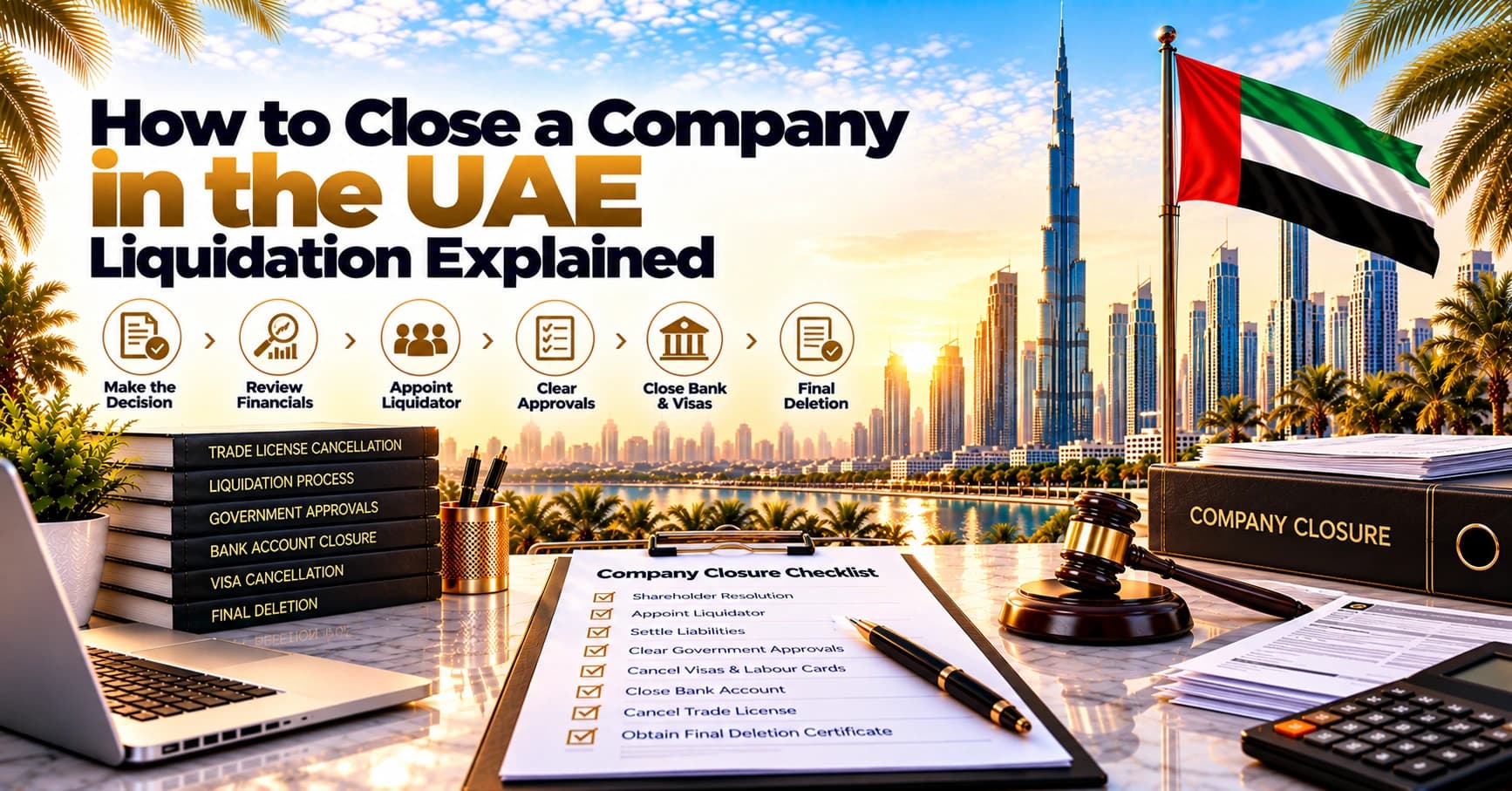
At Company Setup Consultant, we guide owners through closures as carefully as we guide them through setups. This article explains the difference between cancelling and liquidating, the steps involved and the mistakes to avoid.
To close a company in the UAE, you either cancel the trade license (usually for simple, debt free companies) or go through formal liquidation (for companies with assets, liabilities or shareholder issues). Both routes require clearing visas, taxes, bank accounts and tenancy, and obtaining final approvals from the licensing authority. Procedures differ between mainland and free zone companies.
Cancellation vs Liquidation: What Is the Difference?
The two terms are often used as if they mean the same thing, but they describe different levels of process.
Factor | License Cancellation | Formal Liquidation |
|---|---|---|
Typical use | Small or inactive companies with no debts | Companies with assets, liabilities or several shareholders |
Liquidator appointed | Often not required | Usually required |
Process length | Shorter | Longer |
Paperwork | Lighter | More detailed, including reports |
Creditor handling | Little or none | Structured settlement of debts |
Authority involvement | Licensing authority and related bodies | Licensing authority, courts or registrars where applicable |
If you only need to end the license, our guide on how to cancel a trade license in the UAE explains that process in detail. When the company has complexity, liquidation is the safer route.
When Should You Close Your Company?
Closure is worth considering when:
The business has stopped trading and has no plans to restart
The company keeps incurring renewal and compliance costs without income
Partners have agreed to part ways
The owner is relocating and no longer needs the UAE entity
A group restructure makes the entity redundant
The company cannot meet its debts and needs an orderly wind down
Do not simply stop paying and walk away. Unpaid dues, expired licenses and active visas can lead to fines, travel problems and legal disputes.
Understanding Voluntary Liquidation
Voluntary liquidation is started by the company's owners or shareholders, usually because they have decided to end the business. In broad terms, the process involves:
A shareholders' resolution to dissolve the company
Appointment of a liquidator, often a licensed professional or firm
Notification of the decision to relevant parties and, where required, public announcement
Collection of assets and settlement of debts
Distribution of any remaining funds to shareholders
Preparation of a final liquidation report or accounts
Approval from the licensing authority and deletion of the company
The exact legal steps depend on your company type and jurisdiction, so always follow the requirements of your specific authority.
Mainland vs Free Zone Closure
Mainland companies: The process is handled through the relevant licensing authority, and it may involve notarised documents, a liquidator, an audit or liquidation report and clearances from labour, immigration and tax bodies. Costs and timelines depend on the company's size and history.
Free zone companies: Each free zone has its own closure or liquidation procedure, forms and fees. Many are more streamlined than mainland closures, but they still require clearances and final approvals. Confirm the current process directly with your free zone authority.
Step by Step: How to Close a Company in the UAE
Step 1: Make the Decision and Document It
Hold a shareholders' meeting, record the decision to close and sign the resolution. Make sure all partners agree, or follow the procedures in your company documents if they do not.
Step 2: Review Your Financial Position
List your assets, debts, unpaid invoices, salaries, rent and government dues. This shows whether a simple cancellation is possible or formal liquidation is needed.
Step 3: Appoint a Liquidator If Required
Where the process requires it, appoint a liquidator who will manage the wind down and prepare the necessary reports.
Step 4: Settle Staff Matters and Cancel Visas
Pay end of service benefits and outstanding salaries, then cancel employee and owner visas. Our guide on cancelling visas during company closure covers the sequence, including what happens to your own residency status.
Step 5: Deregister From Taxes
If the company is registered for VAT or corporate tax, you must file final returns and deregister within the required timelines. Read more about VAT deregistration and corporate tax deregistration in the UAE, and make sure your last filings are complete.
The corporate tax return filing guide explains what a final return involves. Tax rules and deadlines can change, so confirm with the Federal Tax Authority or a qualified adviser.
Step 6: Close Bank Accounts and Cancel Contracts
Clear balances, settle debts and close corporate bank accounts. Cancel tenancy contracts, utilities, subscriptions and supplier agreements so no new charges appear after closure.
Step 7: Cancel the License and Obtain Final Approval
Submit the cancellation or liquidation documents to the licensing authority, pay any dues and obtain the final certificate or approval confirming the company has been deleted.
Documents You Are Likely to Need
Trade license and establishment card copies
Shareholders' resolution or board resolution
Memorandum of association
Passport and Emirates ID copies of owners
Tenancy contract and cancellation proof
Visa cancellation confirmations
Tax deregistration confirmations
Bank closure letters
Liquidator appointment and final liquidation report, where applicable
No objection certificates from relevant authorities
Requirements vary, so ask your authority for the current checklist.
How Long Does Closure Take?
Simple cancellations can be quick when everything is in order. Liquidations take longer, particularly when there are debts, disputes, outstanding tax filings or slow responses from third parties. The biggest delays usually come from unresolved fines, unfiled returns and missing documents.
What Does It Cost to Close a Company?
Costs depend on the size and history of the company, but typical items include:
Government and authority fees
Liquidator or professional fees
Audit or liquidation report costs
Public announcement or notarisation costs, where required
Clearing of outstanding fines and dues
Visa cancellation fees
Consultant or PRO support
Fees change between authorities and over time, so request a written quotation before you begin.
How Closure Fits Into the Cost to Start a Business in Dubai
A realistic view of covers the whole journey, not only the launch. Founders should think about:
Setup costs such as license, office and visas
Annual renewals and compliance costs
Tax registration and filing costs
The cost of a proper exit when the business ends
Planning for a clean exit helps you avoid unexpected liabilities and gives you confidence when you set up new ventures later.
Common Mistakes to Avoid
Letting the license expire instead of cancelling it properly
Cancelling the license before clearing visas and taxes
Ignoring VAT or corporate tax deregistration
Closing bank accounts before settling all payments
Forgetting to cancel the tenancy contract
Skipping legal advice when partners disagree
Assuming dormant companies have no obligations
Alternatives to Closing Your Company
Closing is not always the best answer. Depending on your situation, you might:
Keep the company dormant if the authority allows it and costs are low
Sell your shares to another party
Change activities and continue operating
Restructure the business instead of winding it down
Compare these options with a professional before you commit.
Why Work With Company Setup Consultant
Company Setup Consultant helps owners close companies cleanly, from choosing between cancellation and liquidation to coordinating visas, tax deregistration and final approvals. We explain each step in plain language, keep you informed about costs and protect you from avoidable penalties. If you also need help with accounting, PRO tasks or final filings, our business support services in Dubai can manage them alongside the closure.
Frequently Asked Questions
Q: How do I close a company in the UAE?
A: You either cancel the trade license, which suits simple companies with no debts, or go through formal liquidation. Both require clearing visas, taxes, bank accounts and tenancy, then obtaining final approval from the licensing authority.
Q: What is the difference between cancellation and liquidation?
A: Cancellation ends the license for straightforward companies, while liquidation is a formal process that settles assets and liabilities, often with a liquidator and final report.
Q: Do I need a liquidator?
A: Often yes for formal liquidation, especially for mainland companies with assets or debts. Requirements depend on your company type and authority.
Q: Can I close my company if it has debts?
A: Debts must be settled or addressed through the liquidation process. You should not simply abandon the company, as unpaid liabilities can follow you.
Q: How long does company closure take?
A: It depends on the complexity. Simple cancellations can be quick, while liquidations take longer due to reports, clearances and approvals.
Q: Do I need to deregister for VAT and corporate tax?
A: If the company is registered, yes. You should file final returns and apply for deregistration within the required timelines.
Q: What happens to my visa when the company closes?
A: Company sponsored visas must be cancelled. Plan your next residency step in advance so you are not left without valid status.
Ready to Close Your Company the Right Way?
A proper closure protects you from fines, blocked services and unresolved liabilities, and it gives you a clean slate for future ventures. Company Setup Consultant will review your company, recommend the right closure route and manage each step with clear and upfront pricing. Our team handles the documents, approvals and follow ups so you can move on with confidence.