
If you are setting up a company in Dubai and applying for a residence visa, two steps come up in almost every file: the visa medical test and the Emirates ID application. They look like small administrative tasks, but they affect your timeline, your budget, and the total cost to start a business in Dubai. Delays here can hold up your visa stamping and, in some cases, your ability to open a bank account or sponsor family members.
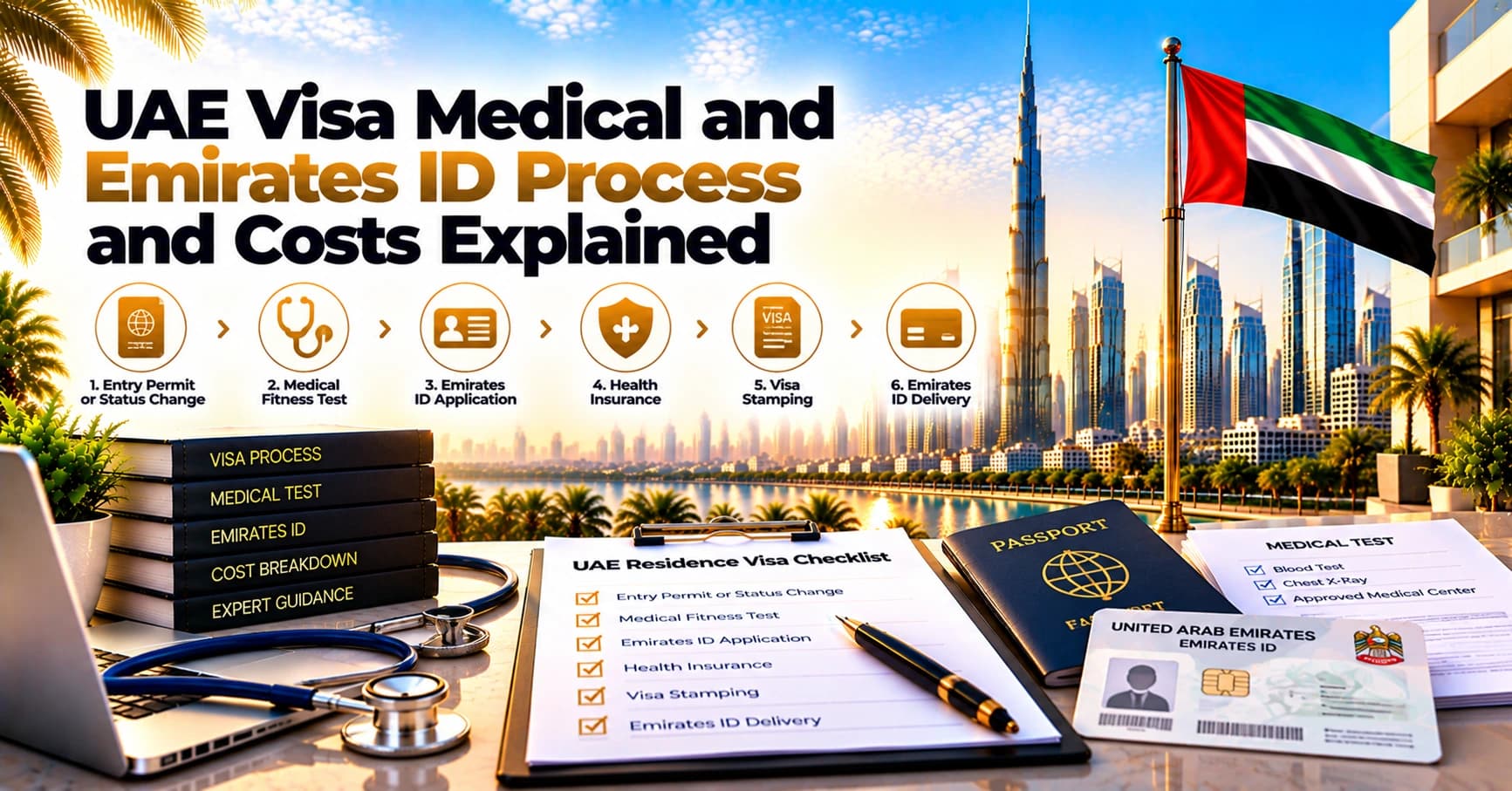
At Company Setup Consultant, we guide investors, partners, and employees through these steps every week. The table below shows where the medical test and Emirates ID fit in the typical residence visa process, so you know what comes before and after each one.
Stage | What Happens | Who Is Involved | Notes |
|---|---|---|---|
1. Entry permit or status change | Applicant enters the UAE or changes status inside the country | Applicant, sponsor company | Required before medical |
2. Medical fitness test | Blood test and chest X-ray at an approved center | Applicant | Results are usually shared electronically |
3. Emirates ID application | Registration and biometrics | Applicant | Biometrics are taken in person |
4. Health insurance | Valid policy linked to the visa | Applicant, sponsor | Required in Dubai |
5. Visa stamping | Residence visa is issued and stamped | Sponsor, service provider | Completed after medical and approvals |
6. Emirates ID delivery | Card is issued and delivered | Applicant | Used for banking, health, and legal services |
The exact order and channels can vary by emirate, visa type, and current rules, so always confirm the latest process before you start.
What Is the UAE Visa Medical Test?
The visa medical test, also called the medical fitness test, is a mandatory health screening for most residence visa applicants. Its purpose is to confirm that the applicant does not have certain communicable diseases that authorities consider a public health risk. The test is done at approved medical fitness centers, and the results are sent to the immigration system.
For most adults, the test includes a blood test and a chest X-ray. Some applicants may need extra checks depending on age, nationality, or occupation. Pregnant women may have different requirements for the X-ray. Because rules can change, the approved center will confirm what applies to your case.
Who Needs a Visa Medical Test?
The requirement usually applies to:
Investors and partners applying for a residence visa through a company
Employees sponsored by a company
Family members sponsored by a resident
Domestic workers and other visa categories, where required
Some categories, such as short term visit visas, do not need a medical test. Golden visa applicants generally complete the medical as part of their process too, and it is worth understanding how that route works if you qualify. Our guide on the golden visa for business owners explains eligibility and how the steps compare to a standard residence visa.
What Is the Emirates ID?
The Emirates ID is the official identity card for UAE residents. It contains your personal details and biometric data and is linked to your residence visa. You will use it for opening a bank account, signing contracts, accessing government services, registering utilities, using health services, and entering many offices.
Every resident, including investors and employees, must apply for an Emirates ID after the residence visa process begins. The card usually has the same validity as your residence visa.
How the Medical and Emirates ID Affect the Cost to Start a Business in Dubai
Many founders budget for the license and office, but forget the personal costs that come with each visa. When you calculate the cost to start a business in Dubai, include these items for every visa holder:
Entry permit or status change fee
Medical fitness test fee
Emirates ID application fee, which varies with the validity period
Health insurance premium
Visa stamping and processing fees
Typing center or service provider charges
Possible fees for expedited or VIP services
As a general guide, the medical test often costs a few hundred dirhams per person, and the Emirates ID fee depends on the validity of the card. Together with the visa itself and insurance, the total per person typically falls in the range of several thousand dirhams. These figures are indicative only and change from time to time, so ask for a written breakdown before paying.
If you are planning a team, multiply these costs by the number of visas. Our guide on how many visas your company can get in the UAE helps you plan your visa quota so your budget matches your hiring plan.
Investor Visa vs Employment Visa: Is the Process Different?
The medical and Emirates ID steps are broadly similar, but the sponsorship and documents differ. An investor or partner visa is tied to your ownership in the company, while an employment visa requires a labour contract and work permit. This affects the documents you submit and, sometimes, the fees and approvals involved.
To understand which visa type fits each person on your team, read our comparison of investor vs employment visa in the UAE. It explains the requirements for each and how they affect your setup.
Documents Usually Required
Requirements vary by visa type and authority, but you should generally prepare:
Valid passport with sufficient validity
Passport size photograph with the required background
Entry permit or status change confirmation
Company trade license and establishment card details
Labour contract for employees, where applicable
Previous Emirates ID, if renewing or transferring
Health insurance details, where required
Because the sponsoring company must be active and in good standing, it also helps to understand how your immigration file works. Our guide on the establishment card in the UAE explains why the card is needed before you process visas.
Step by Step: What to Expect
Complete the entry permit or status change. The applicant either enters the UAE on an entry permit or changes status inside the country, depending on the case.
Book and attend the medical test. Visit an approved medical fitness center with your passport and entry documents. The blood test and chest X-ray are normally done during the same visit.
Wait for the result. Results are usually sent electronically to the immigration system. If a result is unclear, a repeat test may be requested.
Apply for the Emirates ID. Submit your application and attend the biometrics appointment, where fingerprints and a photo are taken.
Arrange health insurance. In Dubai, valid health insurance must be in place for residence visa processing.
Complete visa stamping. After approvals, the residence visa is issued and linked to your passport and Emirates ID.
Receive your Emirates ID. The card is delivered to your registered address or contact point.
Timelines can range from a few working days to a couple of weeks, depending on the visa category, the accuracy of documents, and how quickly appointments are available.
What Happens If the Medical Test Fails?
A failed medical result can mean that the residence visa is not approved. The reasons vary, and in some cases the applicant may be allowed to retest or provide further documentation. In other cases, the visa may be rejected or cancelled. If you receive an unclear or unexpected result, do not ignore it. Ask the medical center or your service provider what the next step is and what documents are required.
This is a sensitive area, so always rely on official guidance and the approved medical center, and consult a qualified medical professional for any health concerns.
Common Mistakes to Avoid
Starting the medical before the entry permit is ready. The test usually follows the entry permit or status change.
Using expired or unclear passport copies. This can delay processing or cause rejection.
Missing the biometrics appointment. Your Emirates ID cannot be finalized without it.
Skipping health insurance. In Dubai, insurance is a requirement, and gaps can delay visa stamping. Our guide on health insurance for a UAE residence visa explains the rules and what to check when choosing a plan.
Forgetting renewal dates. Emirates ID and visa validity should be tracked so you can renew on time and avoid fines.
Not budgeting per person. Small per person fees add up quickly for growing teams.
Emirates ID and Business Operations
For business owners, the Emirates ID is more than a personal document. Banks require it to open corporate accounts, government portals use it for logins, and authorities use it to verify signatories on contracts and license renewals. If your card is lost, expired, or mismatched with your passport details, you may face delays with banking and government services.
Keep your details updated, and make sure your company records match your Emirates ID information.
How Company Setup Consultant Can Help
Handling visas for a growing company means managing multiple people, dates, and authorities at once. Company Setup Consultant helps you plan your visa quota, prepare documents, book medical and biometrics appointments, and track renewals so nothing expires unnoticed. Our visa services in Dubai team provides a clear cost estimate before you start, so you understand the full per person cost.
Final Thoughts
The visa medical test and Emirates ID are routine steps, but they are essential to getting your residence visa and running your business smoothly. Understanding the process, the documents, and the costs helps you plan realistically and avoid delays. When you calculate the cost to start a business in Dubai, remember to include per person visa costs, insurance, and renewals, not just your license.
Plan your visas early, keep documents ready, and track expiry dates for every visa holder.
Frequently Asked Questions
Q: Is the medical test mandatory for a UAE residence visa?
A: Yes, for most residence visa categories. Applicants usually need to complete a medical fitness test at an approved center.
Q: What does the UAE visa medical test include?
A: It usually includes a blood test and a chest X-ray. Requirements can vary by age and category, so confirm with the approved center.
Q: How long does it take to get the medical result?
A: Results are often available within a short time, but timing depends on the center and the visa category.
Q: Do I need an Emirates ID after getting a residence visa?
A: Yes. Every resident must apply for an Emirates ID, which is linked to the residence visa.
Q: How much do the medical test and Emirates ID cost?
A: Costs vary by center, service provider, and card validity. Together with visa fees and insurance, they add to the cost to start a business in Dubai, so ask for an itemized quotation.
Q: Can I open a bank account without an Emirates ID?
A: In most cases, banks require a valid Emirates ID for residents, so it is best to complete it early in your setup.
Q: What happens if I miss my biometrics appointment?
A: Your Emirates ID will not be finalized until biometrics are completed, so you will need to reschedule as soon as possible.
Get Your Visa Process Right From the Start
Visa delays can slow down your hiring, banking, and launch plans. Company Setup Consultant provides clear and transparent guidance on residence visas, medical tests, Emirates ID, insurance, and licensing, so you know exactly what to expect. Speak with our experts today for a free consultation and a customized cost estimate for your Dubai business.