
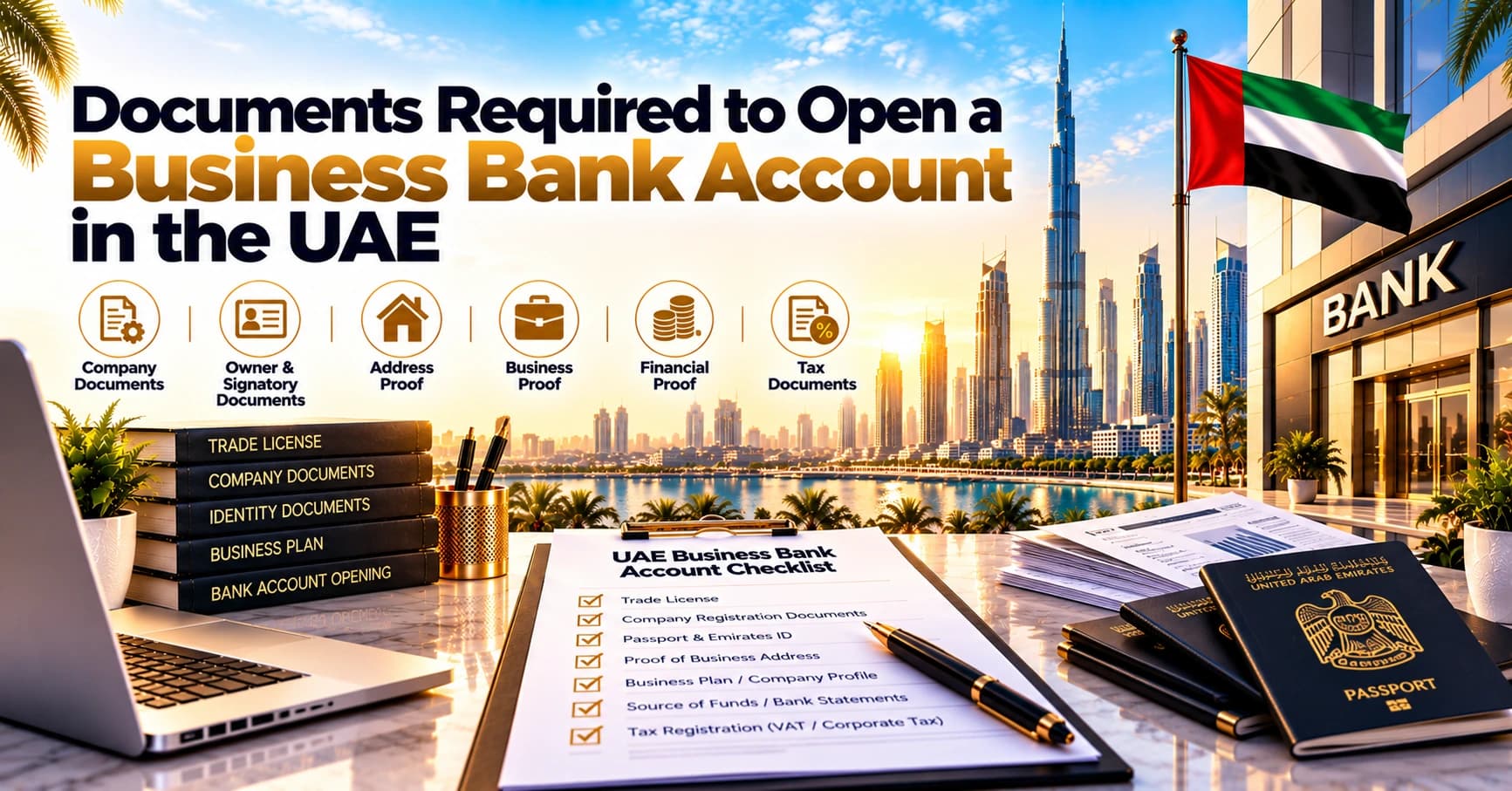
Getting your trade license is a big milestone, but your company is not ready to trade until it can receive payments, pay suppliers and run payroll through a corporate bank account. Many founders discover that account opening takes more time than expected, mainly because of missing or unclear documents. Planning this step is also part of understanding the true cost to start a business in Dubai, since delays can hold up revenue and add extra fees.
At Company Setup Consultant, we prepare bank account files for new and existing companies every week. Here is a quick overview of the core documents banks usually ask for.
Document Group | Examples | Why Banks Ask For It |
|---|---|---|
Company documents | Trade license, memorandum of association, certificate of incorporation | Confirms the company legally exists |
Owner and signatory documents | Passports, Emirates ID, residence visas | Verifies identity of people controlling the account |
Address proof | Tenancy contract, Ejari, free zone lease | Confirms where the business operates |
Business proof | Company profile, contracts, invoices, website | Shows the nature and scale of operations |
Financial proof | Source of funds, bank statements, references | Meets anti money laundering checks |
Tax documents | VAT or corporate tax registration, where applicable | Confirms compliance status |
To open a business bank account in the UAE, you typically need your trade license, company incorporation documents, passports and Emirates IDs of owners and signatories, proof of business address, a company profile or business plan and evidence of source of funds. Requirements vary by bank, company type and risk profile, so always confirm the current checklist with your chosen bank.
Why Banks Ask for So Many Documents
UAE banks follow strict Know Your Customer (KYC) and anti money laundering rules set by the regulators. They must understand who owns the company, what the business does, where the money comes from and how the account will be used. This is why even a small startup may be asked for detailed paperwork and follow up questions.
The more clearly your documents tell one consistent story, the faster the review tends to move.
Core Documents for a UAE Corporate Bank Account
1. Company Registration Documents
Valid trade license (mainland or free zone)
Certificate of incorporation or registration, where applicable
Memorandum of association or articles of association
Share certificates or shareholder register
Partnership or service agreement, where applicable
Initial approval or other regulatory approvals, if your activity requires them
If you are unsure which license fits your activity, our guide to the types of trade license in the UAE is a helpful starting point. Make sure your license is valid before you apply, since banks check the status directly.
2. Identity Documents
Passport copies of all shareholders, directors and authorised signatories
Emirates ID copies for UAE residents
Residence visa copies for UAE residents
Proof of residential address for owners
Passport size photographs, if requested
Non resident owners are usually asked for additional proof of address from their home country.
3. Proof of Business Address
Tenancy contract or Ejari for mainland companies
Free zone lease agreement or flexi desk agreement
Utility bill in some cases
Your registered address should match the one on your license. Differences can slow the review or trigger extra questions.
4. Company Profile and Business Plan
Banks want to understand what you do and how you earn money. Prepare:
A short company profile describing your activities, customers and suppliers
A business plan or projections, especially for new companies
Details of your main countries of operation and expected transaction volumes
Your website or online presence, where relevant
5. Source of Funds and Wealth
This is one of the most important parts of the file. You may need to show:
Where the initial capital came from, such as savings, salary or a previous business
Bank statements of the owners, often for several months
Supporting documents such as sale agreements or dividend proof
6. Commercial Evidence
Signed contracts or purchase orders
Sample invoices
Letters of intent from clients or suppliers
Business references from existing banking relationships
7. Tax Registration Documents
VAT registration certificate, if the company is registered
Corporate tax registration details, where applicable
If you are not yet sure whether you need to register, read our guide on the VAT registration threshold in the UAE to check where you stand.
Additional Documents Banks May Request
Depending on your profile, a bank may also ask for:
Board resolution authorising the account opening
Power of attorney for signatories not present in the UAE
Ultimate beneficial owner declaration
Legalised or attested documents for foreign shareholders
Audited financial statements for existing companies
Details of related companies and group structure
Proof of relevant licences or approvals for regulated activities
Documents for Different Company Types
Mainland LLC: License, MOA, Ejari, owner IDs, business profile and source of funds.
Free zone company: Free zone license, incorporation certificate, share certificate, lease or flexi desk agreement, owner IDs and business profile.
Company with non resident owners: Additional attested documents, proof of address abroad and stronger source of funds evidence.
Existing operating company: Financial statements, VAT records, contracts and transaction history.
Step by Step: How to Prepare Your Bank File
Choose the bank that fits your business type and expected volumes
Collect all company and identity documents
Prepare a clear company profile and business plan
Gather source of funds evidence
Check that names, addresses and dates match across all documents
Submit the application and respond quickly to bank queries
Complete signatory verification and account activation
If you are comparing your options, our guide on business bank accounts in the UAE compared explains how different banks handle requirements and fees.
Digital Banks and Other Options
Some companies prefer digital business accounts because they often offer faster onboarding and lower minimum balance requirements. They may still ask for similar core documents, though the process is more online. You can read about the pros and cons in our article on a digital business bank account in the UAE.
How Banking Fits Into the Cost to Start a Business in Dubai
Opening a bank account is not usually free, and it comes with several cost points founders overlook. The cost to start a business in Dubai should include:
Trade license and registration fees
Office, flexi desk or Ejari related costs
Establishment card and visa costs
Account opening or documentation fees, where charged
Minimum balance requirements and monthly maintenance fees
Attestation, translation and courier costs for documents
Annual renewals and compliance costs
Bank fees and minimum balances differ between banks and change over time, so treat any figure you see online as indicative and confirm current terms before you decide.
Common Reasons for Rejection or Delay
Even well prepared companies can face delays. The most common issues include:
Unclear business activity or vague company profile
Mismatched names or addresses across documents
Weak or undocumented source of funds
Business activities considered higher risk by the bank
Missing or expired documents
Unresponsive applicants during the review
If your application is turned down, don't panic. Our guide on why a business bank account gets rejected in the UAE explains the reasons and what to do next.
Why Work With Company Setup Consultant
Company Setup Consultant helps founders prepare complete, consistent bank files and choose banks that match their business model. We review your documents, highlight gaps before submission and guide you through the process. If you also need ongoing accounting, PRO and compliance support after your account is open, our business support services in Dubai can keep your company organised and compliant. Our advice reflects current practice and focuses on long term banking relationships, not just quick approvals.
Frequently Asked Questions
Q: What documents do I need to open a business bank account in the UAE?
A: Typically you need your trade license, incorporation documents, passports and Emirates IDs of owners and signatories, proof of address, a company profile and source of funds evidence.
Q: Can I open a business bank account without a trade license?
A: In most cases no. A valid license is the starting point for a corporate account, although some banks may offer limited options for freelancers or sole professionals.
Q: Do non resident owners need extra documents?
A: Often yes. Banks may ask for attested documents, proof of address abroad and stronger source of funds evidence.
Q: Do I need an office to open a business account?
A: Banks usually require proof of a registered address, which can be an office, shared space or flexi desk depending on your license type.
Q: How long does it take to open a business bank account?
A: Timelines vary by bank, company type and completeness of your file. A well prepared application generally moves faster.
Q: Is a minimum balance required?
A: Many banks set a minimum balance and may charge fees if it is not maintained. Terms differ by bank and account type, so confirm before applying.
Q: Can a bank reject my application?
A: Yes. Banks can decline applications based on their risk assessment, and they do not always give detailed reasons. Strong documentation improves your chances.
Ready to Open Your Business Bank Account?
A complete and consistent document file is the fastest way to get your corporate account approved. Company Setup Consultant will review your paperwork, match you with suitable banks and guide you through the application with clear and upfront pricing. Our team handles the preparation, follow ups and coordination so you can start trading sooner. Contact Company Setup Consultant today for a free consultation and a personalised quotation.