
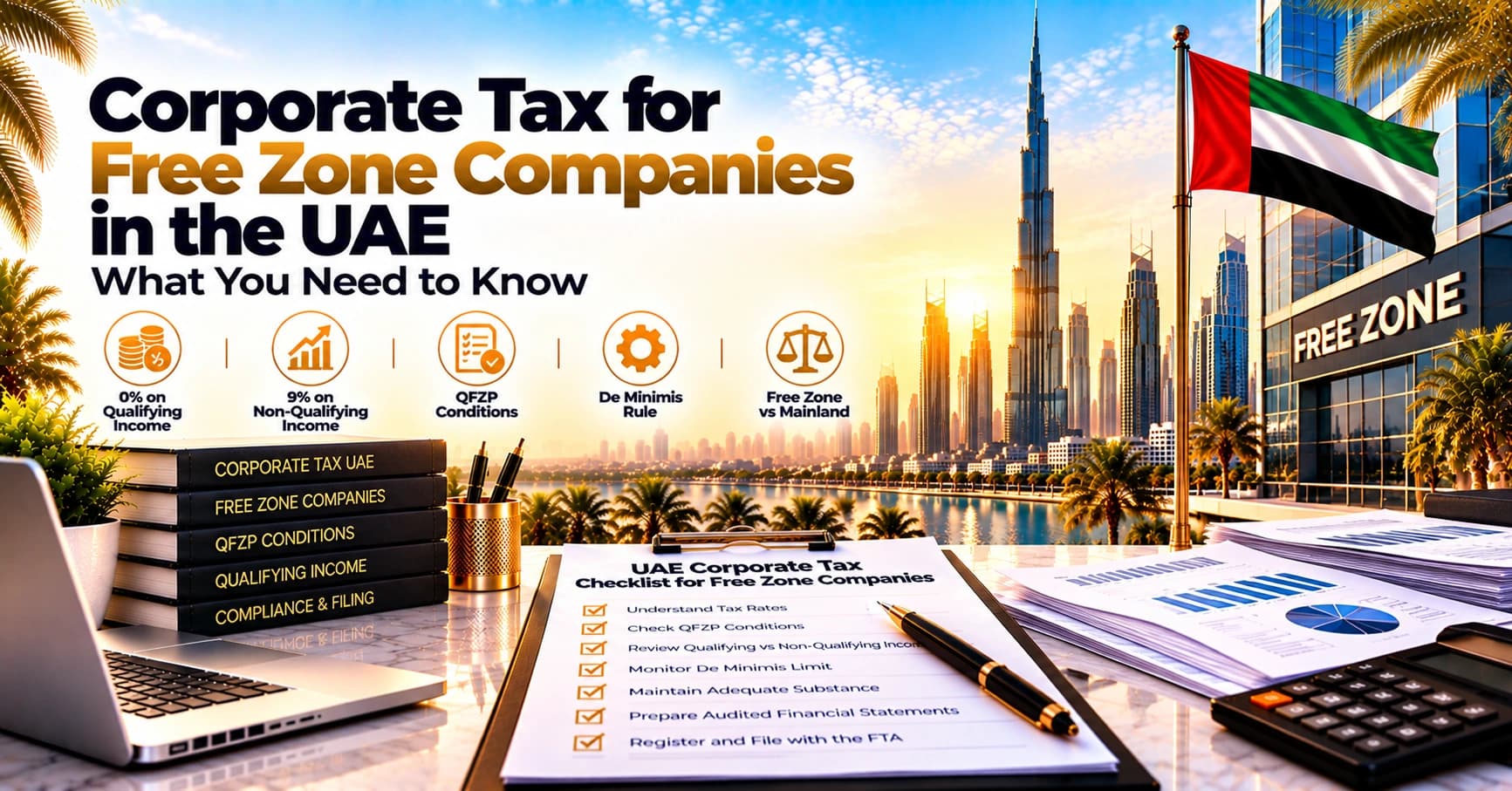
At Company Setup Consultant, we help free zone owners understand where they stand before the tax bill arrives. Here is what you need to know.
A free zone company is not automatically exempt from UAE corporate tax. A company that qualifies as a Qualifying Free Zone Person can pay 0 percent on qualifying income and 9 percent on non qualifying income above the allowed limits. A free zone company that does not meet the conditions is taxed under the standard rules, which means 0 percent on taxable income up to AED 375,000 and 9 percent above that.
Are Free Zone Companies Exempt From Corporate Tax?
No. Free zone companies are within the corporate tax regime like other UAE businesses. What sets them apart is that they may be eligible for a special regime if they qualify. Being registered in a free zone gives you the possibility of a 0 percent rate, not a guarantee.
What Is a Qualifying Free Zone Person?
A Qualifying Free Zone Person (QFZP) is a free zone entity that meets the conditions in the corporate tax law and related decisions. In broad terms, it must:
Maintain adequate substance in the free zone, meaning real people, premises and activity there
Derive qualifying income
Keep non qualifying revenue within the permitted limit
Comply with transfer pricing rules
Prepare audited financial statements
Not have elected to be taxed under the standard regime
Failing any of these conditions can result in the loss of QFZP status, and the consequences can be significant. Conditions and definitions are updated from time to time, so confirm the current rules with the Federal Tax Authority (FTA).
Qualifying Income vs Non Qualifying Income
Type of Income | Typical Treatment |
|---|---|
Qualifying income | 0 percent for a QFZP |
Non qualifying income | 9 percent |
Income from excluded activities | 9 percent |
Income above the permitted non qualifying limit | May put QFZP status at risk |
Qualifying income generally includes income from transactions with other free zone persons, subject to conditions, and income from specified qualifying activities. Examples of qualifying activities can include manufacturing, processing, holding shares and securities, certain logistics services, fund management and headquarter services, among others. Income from dealings with mainland customers is generally treated as non qualifying, with limited exceptions.
Because the list of qualifying and excluded activities is technical and can be amended, always check the latest official guidance before relying on it for your business model.
The De Minimis Rule
A QFZP is allowed a small amount of non qualifying revenue without losing its status. This is often called the de minimis rule. In general, non qualifying revenue must not exceed a stated percentage of total revenue or a fixed amount, whichever is lower. If a company goes over the limit, it can lose QFZP status and be taxed under the standard rules, often for several years. This is one of the easiest ways for a growing business to trip up, so track your revenue mix throughout the year, not just at year end.
What Happens If You Lose QFZP Status?
Losing QFZP status means the company is generally taxed under the regular regime from the period in which the breach occurred, and it may not be able to return to the special regime for a set number of years. Taxable income above AED 375,000 would then be taxed at 9 percent. In some cases, Small Business Relief may be an option instead, but only if the business is eligible and elects it correctly. You can read more about that in our guide on UAE corporate tax for small businesses.
Free Zone vs Mainland: Does Tax Change Your Choice?
Tax is one factor among many. A free zone may suit you if you trade mainly with other free zone companies or overseas customers, hold assets, or run a qualifying activity. A mainland setup may fit better if you serve UAE customers directly. Neither option is automatically cheaper once tax, licensing, office and visas are counted together. Our guide on mainland vs free zone compares the two models in detail. If you are leaning toward the mainland, you can also explore our mainland company setup in Dubai service.
Do Free Zone Companies Need to Register for Corporate Tax?
Yes. Free zone companies must generally register for corporate tax, even if they expect to pay 0 percent. Registration is separate from being a QFZP, and it is a legal requirement for most taxable persons. Our step by step article on how to register for corporate tax in the UAE covers the process and the documents you will need.
Compliance Requirements for Free Zone Companies
Even at 0 percent, compliance is not optional. Free zone companies should plan for:
Corporate tax registration with the FTA
Annual corporate tax return filing
Audited financial statements, particularly for QFZPs
Transfer pricing documentation where related party transactions exist
Records that prove substance, such as leases, staff and activity in the free zone
Separate tracking of qualifying and non qualifying income
Missing deadlines or failing to keep proper records can lead to administrative penalties. Our overview of corporate tax penalties in the UAE explains the common triggers and how to avoid them.
Substance: Why Real Presence Matters
The substance requirement means your free zone company should carry out its core income generating activities in the UAE, with adequate staff, assets and operating expenses. A company that exists only on paper, with a desk but no real activity, may struggle to prove it qualifies. If you are still choosing a setup, review the practical side of your structure with our free zone company setup in Dubai team so your license, office and operations support your tax position from day one.
A Simple Example
Imagine a free zone company that earns AED 4 million in revenue. AED 3.9 million comes from qualifying activities and dealings with other free zone persons, and AED 100,000 comes from a mainland customer. If the non qualifying amount is within the permitted limit, the company may keep its QFZP status, paying 0 percent on qualifying income and 9 percent on the non qualifying profit. If the mainland income were much larger and passed the limit, the company could lose its QFZP status and be taxed under the standard rules. This example is illustrative only and does not replace advice on your real figures.
How Corporate Tax Affects the Cost to Start a Business in Dubai
When comparing options, look beyond the license price. The cost to start a business in Dubai through a free zone should include:
License and registration fees
Flexi desk, office or warehouse costs
Visa, medical and Emirates ID costs
Accounting and bookkeeping
Corporate tax registration and annual return
Audit fees, where required
Transfer pricing support, where relevant
Possible tax payments on non qualifying income
Pricing varies between free zones and service providers, so request a written breakdown before you decide.
Common Mistakes Free Zone Owners Make
Assuming a free zone license means zero tax in every case
Ignoring mainland income and the de minimis limit
Skipping audited financial statements
Not proving real substance in the free zone
Failing to register because "the rate is zero"
Relying on outdated activity lists
Why Work With Company Setup Consultant
Company Setup Consultant helps free zone founders choose the right structure, understand their tax position and stay compliant year after year. We explain complex rules in plain language, coordinate with accountants and auditors and keep you informed about changes. Our guidance follows current FTA information and focuses on protecting your 0 percent position where you qualify.
Frequently Asked Questions
Q: Do free zone companies pay corporate tax in the UAE?
A: They can. A Qualifying Free Zone Person may pay 0 percent on qualifying income and 9 percent on non qualifying income. Companies that do not qualify are taxed under the standard rules.
Q: What is a Qualifying Free Zone Person?
A: It is a free zone entity that meets conditions such as adequate substance, qualifying income, limits on non qualifying revenue, transfer pricing compliance and audited financial statements.
Q: Is income from mainland customers taxable?
A: It is generally treated as non qualifying income, which is taxed at 9 percent, with limited exceptions. Keep it within the permitted limit to protect your status.
Q: Do free zone companies need to register for corporate tax?
A: Yes. Most free zone companies must register and file returns, even if they expect to pay 0 percent.
Q: Do I need audited financial statements?
A: Qualifying Free Zone Persons are generally required to prepare audited financial statements. Check the current rules for your situation.
Q: What happens if I exceed the non qualifying income limit?
A: You can lose QFZP status and be taxed under the standard regime, often for multiple years. Monitor your revenue mix regularly.
Q: Is a free zone better than the mainland for tax?
A: Not always. It depends on your activities and customers. Compare total costs and tax outcomes before choosing.
Planning Your Free Zone Company Tax Position?
A free zone can be a smart base for your business, but only if the tax rules work for your income and operations. Company Setup Consultant will review your activities, revenue mix and structure, then recommend the setup and compliance plan that protects your position, with clear and upfront pricing. Our team handles registration, coordination and follow ups so you can focus on growth.