
Picture this: your company is a few months old, sales are coming in, and a reminder arrives that your first VAT return is due. You log in, see a long form full of boxes and realise you are not sure which figures go where. Many new business owners feel exactly this way. Filing VAT is not difficult once you understand the logic, but mistakes and late filings are expensive. That is why VAT compliance belongs in any realistic estimate of the cost to start a business in Dubai, alongside licensing, office and visa costs.
At Company Setup Consultant, we help businesses file accurate VAT returns on time. This guide walks you through the process from start to finish, in plain language.
What a VAT Return Is
A VAT return is a periodic report that tells the Federal Tax Authority (FTA) how much VAT you collected on sales and how much VAT you paid on purchases. The difference is either paid to the FTA or, if you paid more than you collected, claimed as a refund or carried forward. The standard VAT rate in the UAE is 5 percent, and some supplies are zero rated or exempt.
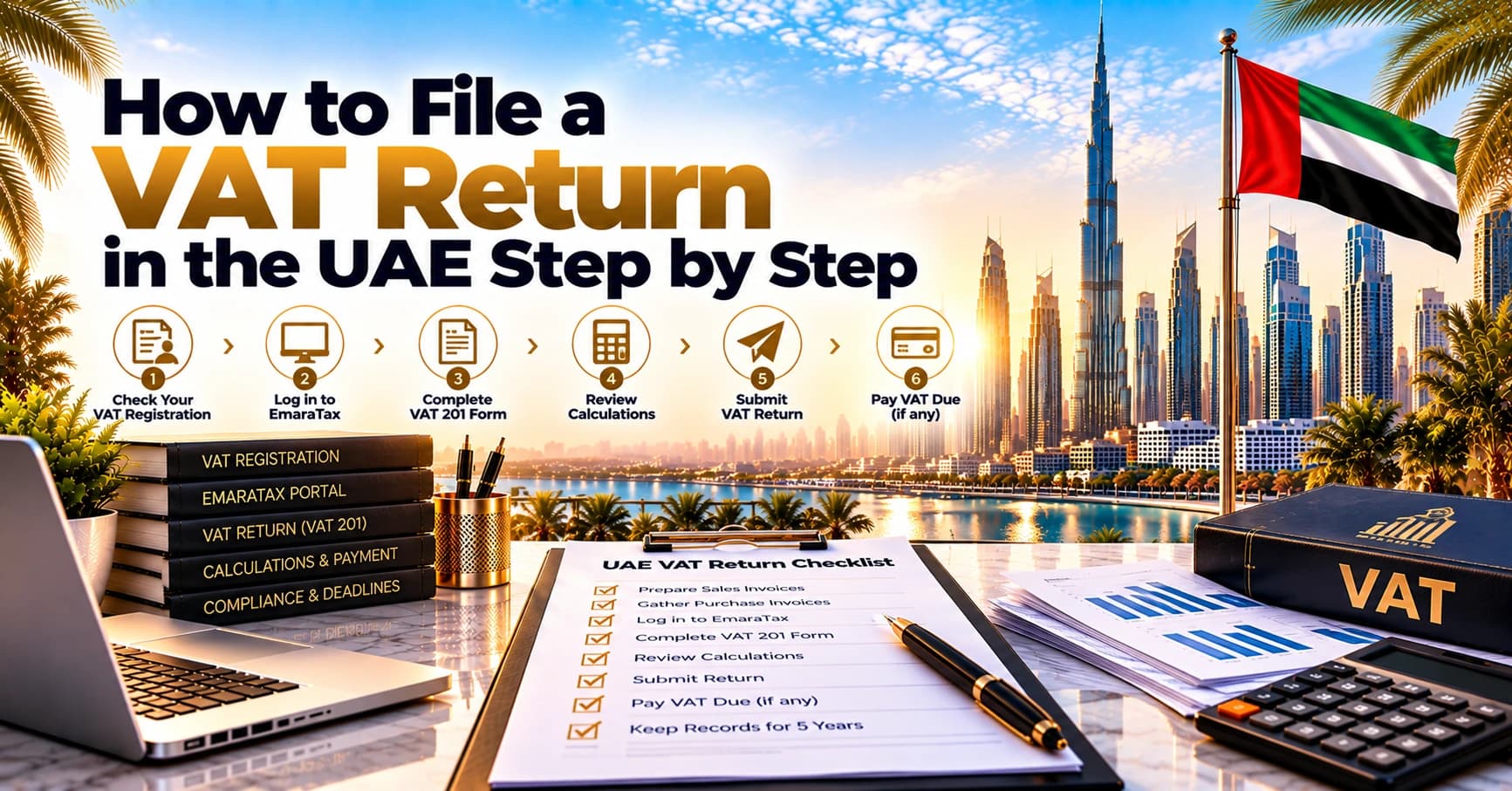
To file a VAT return in the UAE, log in to the FTA's EmaraTax portal, open the VAT return form (VAT 201) for your tax period, enter your sales, purchases and adjustments, review the calculated VAT due, submit the return and pay any balance by the deadline. Returns are generally due within 28 days after the end of the tax period.
Step Zero: Are You Registered?
You can only file returns once you hold a VAT registration and Tax Registration Number (TRN). If you have not registered yet, or you are unsure whether your turnover requires it, start with our guides on how to register for VAT in the UAE and the VAT registration threshold in the UAE. Registration rules and thresholds are set by law and can be updated, so confirm the latest position with the FTA.
Know Your Deadline First
The FTA assigns each registered business a tax period, usually quarterly, though some businesses are assigned monthly periods. Your return and any payment are generally due by the 28th day after the period ends. If the 28th falls on a weekend or holiday, check the FTA's guidance for the applicable date.
A simple habit helps: mark the period end date in your calendar, then set an internal reminder about ten days before the deadline. This gives you time to reconcile records and fix errors without rushing.
What to Prepare Before You Log In
Good returns are built on good records. Before you open the portal, gather:
All tax invoices issued for the period
All supplier invoices and credit notes for the period
Import documents and customs declarations, if you import goods
Records of zero rated and exempt supplies
A list of expenses on which VAT can be recovered
Any adjustments, such as bad debt relief or corrections from earlier periods
Your accounting system report for the period
UAE law expects you to keep VAT records for at least five years, and longer for certain categories such as real estate. Accurate bookkeeping also makes your corporate tax filing easier later.
Filing the VAT 201 Return, Section by Section
The FTA's return form is called VAT 201. The exact layout can change, so always follow the current version in the portal. In general, it is organised like this.
Part 1: VAT on Sales and Outputs
Here you report the value of your sales and the VAT charged. Standard rated supplies are usually reported by emirate, because the FTA tracks where supplies are made. Separate boxes cover tax refunds for tourists, supplies subject to the reverse charge, zero rated supplies, exempt supplies and goods imported into the UAE.
Part 2: VAT on Expenses and Inputs
This section captures the VAT you paid on purchases that you are allowed to recover. It includes standard rated expenses, imports and supplies where you account for VAT under the reverse charge mechanism. Not every expense qualifies for recovery, so check the rules on blocked or non recoverable items.
Part 3: Net VAT Due
The form calculates the difference between output VAT and recoverable input VAT. If output VAT is higher, you owe the difference. If input VAT is higher, you may be entitled to a refund or credit.
Part 4: Additional Information and Declaration
You confirm that the return is accurate and complete, and you may indicate whether you want any refund to be paid out or carried forward.
A Simple Worked Example
The figures below are invented to show the logic, not to reflect any real business.
Item | Amount in AED | VAT at 5 percent |
|---|---|---|
Standard rated sales | 400,000 | 20,000 |
Zero rated export sales | 100,000 | 0 |
Standard rated purchases | 150,000 | 7,500 |
Net VAT payable | 12,500 |
In this example, the business collected AED 20,000 in VAT on sales and paid AED 7,500 on recoverable purchases, so it owes AED 12,500 to the FTA. The zero rated sales are still reported in the return even though no VAT is charged on them.
How to Submit and Pay
Log in to EmaraTax with your credentials.
Open the VAT return for the relevant tax period.
Enter or check every figure against your records.
Review the automatically calculated VAT payable or refundable amount.
Submit the declaration.
Pay any balance using one of the payment methods the FTA supports, and keep proof of payment.
Payment should reach the FTA by the due date, not merely be initiated on that day, so pay a little early to avoid processing delays.
Common Mistakes That Cause Penalties
Filing after the 28 day deadline
Reporting supplies in the wrong emirate
Claiming input VAT without a valid tax invoice
Forgetting the reverse charge on eligible imported services
Treating zero rated and exempt supplies as the same thing
Not reconciling the return to the general ledger
Ignoring credit notes and adjustments
Penalties for Late Filing and Late Payment
The FTA applies administrative penalties for non compliance. As a general guide, late filing carries a fixed penalty that increases for repeated offences, and late payment attracts a percentage penalty that grows over time. Penalty amounts and conditions are set by law and can be updated, so verify the current schedule with the FTA. For a wider view of what non compliance can cost, read our guide on corporate tax penalties in the UAE.
What If You Find a Mistake After Filing?
Errors happen. If you discover a mistake in a return you have already submitted, do not ignore it. The FTA allows corrections through a voluntary disclosure process, and acting early usually leads to a better outcome than waiting for an audit. Keep a clear record of what was wrong, what you corrected and why.
VAT and Corporate Tax Work Together
VAT is only one part of your tax calendar. Depending on your income and structure, your company may also need to register for and file corporate tax. Many owners find it easier to keep both under one process, and our guide on corporate tax return filing in the UAE explains the corporate side. Tax rules change from time to time, so confirm your obligations with the FTA or a qualified adviser.
When You No Longer Need to File
If your business stops trading or its turnover falls below the level that requires registration, you may be able to cancel your VAT registration. Cancelling is a formal process, and you must keep filing until it is approved. Learn more in our guide on VAT deregistration in the UAE.
If you are closing the whole business, read about corporate tax deregistration in the UAE so both tax registrations are closed correctly.
How VAT Filing Affects the Cost to Start a Business in Dubai
Many founders budget for the license and forget the running costs of compliance. The cost to start a business in Dubai should include:
License, office and visa costs
Accounting software and bookkeeping
VAT registration and filing support
Corporate tax registration and filing
Possible penalties if deadlines are missed
Audit or review fees, where required
Pricing for accounting and tax services differs between providers, so request a clear quotation before you commit. If you would rather hand off bookkeeping, VAT and compliance, our business support services in Dubai can manage it for you.
Why Work With Company Setup Consultant
Company Setup Consultant helps companies stay compliant from day one, from company formation and bank accounts to VAT and corporate tax. We keep our guidance current, explain each step in clear language and focus on accuracy so you avoid avoidable penalties.
Frequently Asked Questions
Q: How do I file a VAT return in the UAE?
A: Log in to the FTA's EmaraTax portal, open the VAT 201 return for your tax period, enter your sales, purchases and adjustments, submit the return and pay any balance by the deadline.
Q: What is the deadline for filing a VAT return?
A: Returns are generally due within 28 days after the end of your tax period. Confirm the exact date shown in your portal.
Q: How often do I need to file?
A: Most businesses file quarterly, but the FTA may assign monthly periods to some. Your assigned period appears in your EmaraTax account.
Q: Do I have to file a return if I had no sales?
A: Yes. Registered businesses must still submit a return for each period, even when there is no activity, and report nil figures.
Q: What happens if I file late?
A: You may face administrative penalties, and late payment can add further charges. Check the current penalty schedule with the FTA.
Q: Can I fix a mistake in a VAT return I already filed?
A: Yes, through the FTA's voluntary disclosure process. It is best to correct errors as soon as you find them.
Q: Can Company Setup Consultant file my VAT return for me?
A: Yes. We can prepare and file your VAT returns, or support your in house accountant, subject to the right documents and authorisations.
Need Help With Your VAT Return?
A missed deadline or a wrongly reported figure can cost far more than getting expert help. Company Setup Consultant will review your records, prepare your return and make sure it is filed and paid on time, with clear and upfront pricing. Our team handles the details so you can focus on running and growing your business. Contact Company Setup Consultant today for a free consultation and a personalised quotation.